History
Before the 1930s – Fields and Heathland
Before the development of the local suburbs, the land where Roxbourne now stands was largely rural. The area consisted of open fields and heathland, with small streams running through the landscape. One of these streams still flows through what is now Roxbourne Park.
Early 1930s – The Arrival of “Metroland”
The extension of the Metropolitan Line transformed the surrounding area. Fast rail connections made it possible for people working in London to live further from the city centre while still commuting easily. This led to the rapid growth of new suburban communities across north-west London, often referred to as “Metroland.”
Mid-1930s – A New Community Emerges
As demand for housing increased, developers began building homes across the area. It is believed that a developer named Mr Nash started constructing many of the houses around Roxbourne in 1936. Families soon began moving into the new neighbourhood, attracted by affordable homes and good transport links.
1938 – Roxbourne School Opens
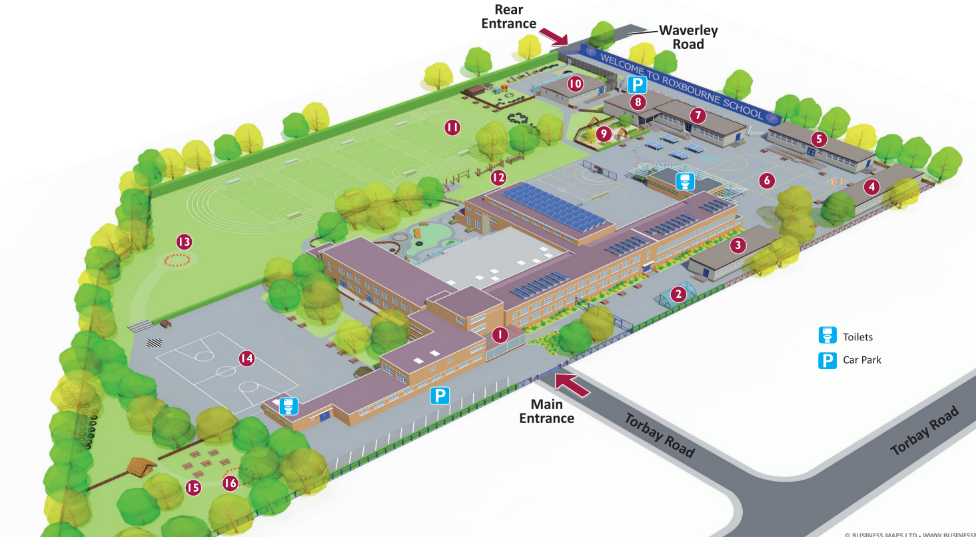
As the community grew, a local school became essential. The foundations of Roxbourne Primary School were laid during this period of development.
In May 1938, the school building was completed and officially opened with a ceremonial dedication service, welcoming the first generation of Roxbourne pupils.
The Name “Roxbourne”
The name Roxbourne is believed to reflect the natural landscape that existed before the area was developed:
-
Rox – likely derived from rook, the bird
-
Bourne – an old word meaning a small stream or brook
The area was once known for its rooks and the stream running through the nearby parkland.
Roxbourne Today
Today, Roxbourne continues to serve the local community, just as it has since 1938. Generations of families have passed through the school, and it remains an important part of the neighbourhood — combining its historic roots with an ambitious education for today’s pupils.